

Therefore, they utilize capital budgeting strategies to assess which initiatives will provide the best returns across a given period. Owing to its culpability and quantifying abilities, capital budgeting is a preferred way of establishing if a project will yield results. The cost of capital is usually a weighted average of both equity and debt.
Understanding Debt Ratios for Financial Health Analysis
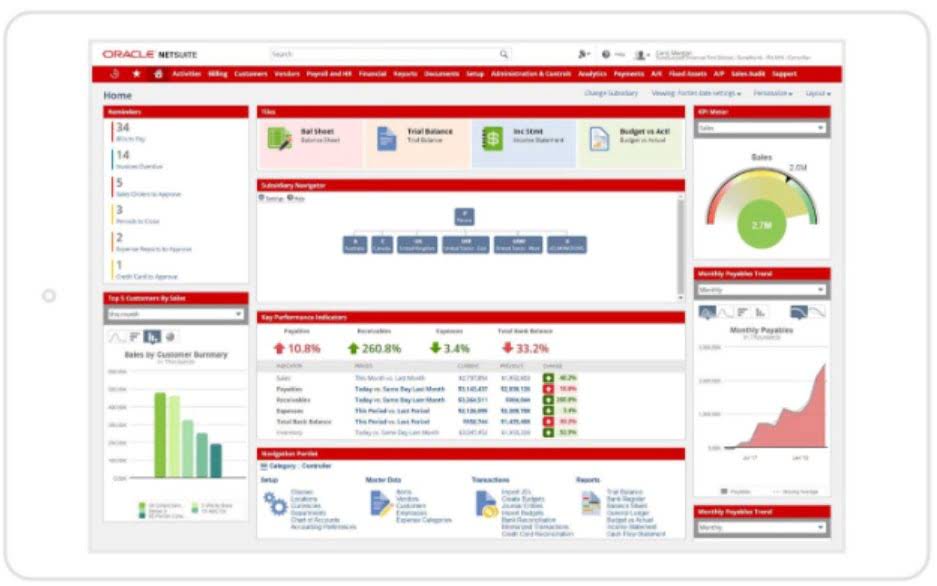
Despite its popularity, there are drawbacks to using capital budgeting IRR you should be aware of. Also, IRR doesn’t work for projects with unconventional cash flows, or cash flows that change direction more than once. Capital budgeting is the act of allocating scarce capital across available projects and investments. Online capital budgeting tools have gained popularity in recent years due to their user-friendly interfaces and cloud-based access.

Key Takeaways
- Effective implementation closes the loop in your understanding of what is capital budgeting, ensuring that strategic decisions turn into tangible, profitable outcomes.
- For example, a trucking company owner may be thinking about buying a new truck to focus on making local, short-haul deliveries.
- This is usually done by error and trial method else we can use excel for the same.
- First, it is unusually difficult to obtain funds outside of the budget period, even for deserving projects.
- Capital budgeting is a vital part of all the organizations, whether big or small.
Internal rate of return (IRR) is the interest rate at which a project’s net present value becomes zero. It offers insights into the project’s potential returns, and if the IRR exceeds the cost of capital, the project is considered worthwhile. Net present value (NPV) measures the profitability of a project by comparing the present value of cash inflows to the initial investment, accounting for the time value of money.

Factors Determining Capital Structure
It is a simple method that only requires the business to repay in the predecided timeframe. However, the problem it poses is that it does not count in the time value of money. This is to say that equal amounts (of money) have different values at different points in time. Ideally, businesses could pursue any and all projects and opportunities that might enhance shareholder value and profit. Capital budgeting aims to allocate its funds to projects that https://www.bookstime.com/ yield the best returns, considering risks and market conditions. Capital budgeting is the tool that helps businesses plant their financial “seeds” wisely.
Gathering information and making cash flow estimates
Generally, the potential capital projects with the highest rate of return are the most favorable. An acceptable standalone rate is higher than the weighted average cost of capital. You’d use the process of capital budgeting to make a strategic decision whether to accept or reject a proposed investment project.
Cash flow considerations are an important factor in capital budgeting. This adds layers of complexity to the capital budgeting process, thereby requiring a more in-depth and global approach. In summary, capital budgeting aids in the efficient allocation of resources during M&A by providing a robust financial model for retained earnings balance sheet assessing potential investments and their financial viability.
Implementation of project
- The process starts by generating potential ideas for capital budgeting projects.
- Management then decides how long they are willing to wait to recover their investment (critical acceptance level — T) and compares the calculated payback period to the critical acceptance level.
- Individual managers serving at various levels of organization can approve only those projects that fall within their authorized limit of investment.
- Companies use WACC to determine whether a project meets or exceeds their cost of capital.
- However, detailed cash flow forecasts and an appropriate discount rate are needed.
- Those with the highest discounted value should be accepted if funds are limited and all positive NPV projects can’t be initiated.
- Behavioral finance helps us understand why people make, at first, illogical decisions.
This involves an assessment of the strategic fit of the project with the organization’s goals and objectives. The financial viability is also examined by calculating the estimated costs, potential revenue, and assessing the project’s market potential. By analyzing future cash flows and potential risks, capital budgeting techniques provide a data-driven approach to investment decisions. This reduces the reliance on intuition or gut feeling, leading to more objective and well-supported choices. Capital budgeting is the process of evaluating and selecting long-term investment projects or capital expenditures.
